
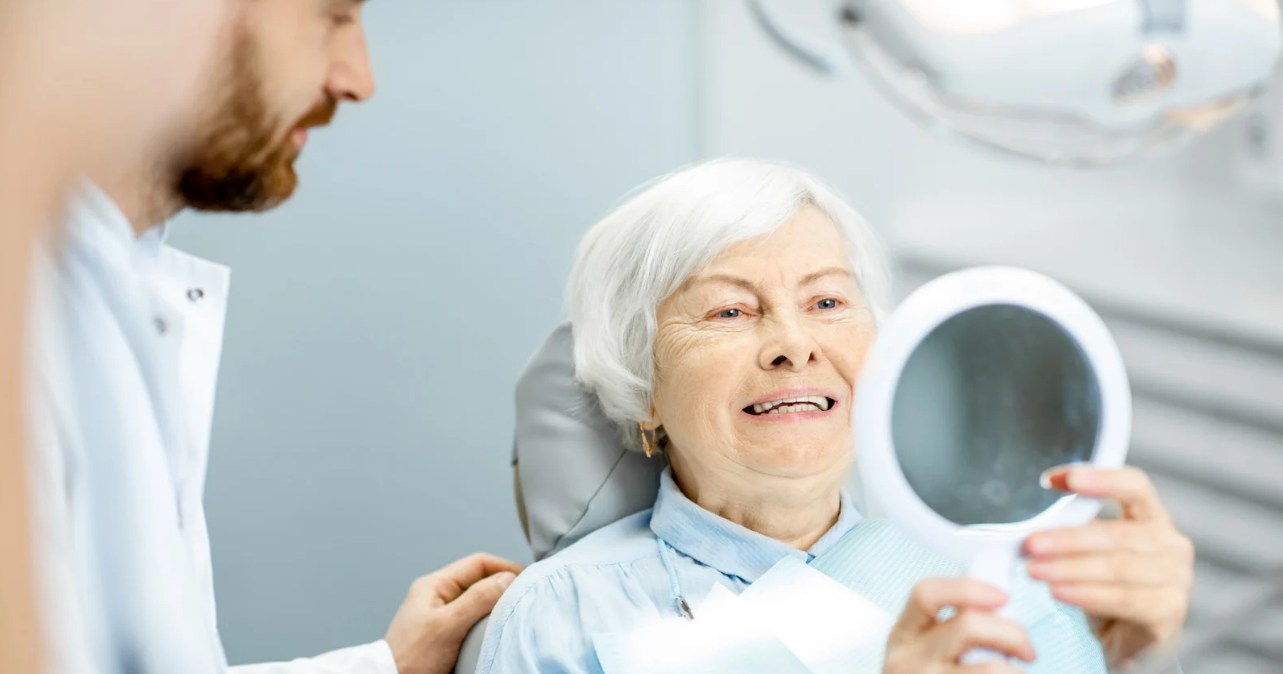

What your mouth needs when you’re 4, 14, 44, and 74 are very different things – from the risks, to the treatments, to the stakes. But most people treat their dental habits like an infomercial at 3 in the morning – one-size-fits-all. They take the “brush twice a day” advice from pre-school straight through retirement without ever knowing what their dentist is actually snipping, grinding, or filing, and why that changes every couple of decades. Reframing the specifics of your oral situation by decade could make prevention more of an intentional practice.
Childhood is a space-planning problem, not just a decay problem
Primary teeth are often overlooked as transitory teeth; but they preserve space for the permanent teeth underneath them. If a baby tooth is lost prematurely to decay, the teeth around it can shift into that space, and the waiting permanent tooth frequently has no space to grow. This is how much of adult crowding starts – not from misfortune, but from a cavity that was left untreated at the age of five.
This is also the time to preventatively spend the most money. Dental sealants reduce up to 80% of cavities in the molars during the first few years after they are placed. Fluoride, whether from tap water or from a fluoride varnish, works in conjunction with dental sealants. Community water fluoridation is estimated to decrease cavities by about 25% alone. This means much of children’s tooth decay is preventable – rather than merely treatable.
Orthodontic screening fits into this time frame too. Most parents are surprised to learn that the recommendation is that children get their first orthodontic evaluation by the age of 7. This is not about braces at seven – it is about catching crossbites, jaw discrepancies, or crowding patterns while the growing, malleable jaw can still be easily altered. Building a relationship early with trusted local providers such as dentists in Mandurah means these kinds of issues get caught at the right time. Interceptive treatment at this age is often easier, shorter, and cheaper than when those growth plates have closed.
Late teens bring the wisdom tooth decision
Somewhere between the ages of 17 and 21, most people reach a decision point about their third molars, or wisdom teeth. They’re the teeth farthest back in your mouth, and because of evolution (our jaws used to be bigger), many people don’t have enough room in their mouth for these four extra molars. If they don’t have the space to break through the gumline and grow in properly, they can lead to infections, decay and gum disease.
Physicians don’t always recommend removing wisdom teeth, but those that are impacted or only partially erupted (meaning they can’t grow in naturally, often because there’s not enough room in the mouth) are common enough that most dentists will track their progress during late adolescence. A dentist will typically use X-rays or, more commonly now, a cone beam CT scan, to see how the teeth are positioned in the jaw, how close they are to the surface, and whether they’re growing in at an angle that could damage neighboring teeth if left alone.
Adulthood is where gum disease takes over from cavities
Something shifts surreptitiously when you hit your 30s. Cavities step back as the big bad, and periodontal disease takes over that role for the rest of your life. According to CDC stats, about 47% of adults aged 30 and older have some form of periodontal disease, and that number climbs to about 70% for people 65 and older. It’s the leading cause of adult tooth loss, and it usually starts as something as banal-in-appearance as gums that bleed a little when you floss.
Gingivitis, the earliest stage, is reversible with better hygiene and a professional cleaning. Left alone, it progresses to periodontitis, where the infection moves below the gumline and begins breaking down the bone that holds your teeth in place. That damage doesn’t grow back. This is why the dental work profile in adulthood looks so different from childhood – fewer small fillings, more scaling and root planing, more crowns and root canals as older restorations and weakened teeth start to fail under years of use.
With that sort of attrition, you’d expect most people to have a dentist on speed dial. But according to the American Dental Association, only 52% of Americans see a dentist at least once a year. Estimates suggest that 95% of common dental problems can be eliminated by preventive care and simple monitoring. But that requires regular visits. Bruxism, for example, tends to worsen with age, often combined with tooth dehydration (which makes them more prone to cracking) as adults get quieter, drier mouths.
This is the decade of life where regular check-ins with a good dentist actually pay off. If you’ve had consistent oral checkups for your whole life, a single tooth that needs a crown in your thirties or a root canal in your forties shouldn’t blindside you. Most likely, your dentist’s been watching the fissures in your back molar slowly spread outward for the last five to 10 years: they know exactly where you’re vulnerable.
Midlife: when old fillings fail and gums start exposing roots
In your forties and fifties, you face the intersection of two common problems. All the restorative work you had as a teenager and young adult, which seemed like it would last forever, is running out of steam. Fillings, crowns, bonded this and that – it all eventually fails, wears, or leaks, and somewhere around the 20-to-30-year mark is when the work you had done starts needing to be re-done. The fillings you got in your 20s were small, though. The ones you have to get in your 40’s might be big. Maybe bigger than you’re prepared for.
The second issue that arises at this stage is gum recession; whether from aggressive oral hygiene, genetics, or periodontal disease, the gums tend to start pulling away and exposing the roots. Root surfaces are made of cementum, which is about as tough as cheddar cheese compared to the enamel on the crown of your tooth. Once it’s lost and the roots are exposed, things go quickly. This is typically the age when you run the risk of root caries – cavities down along the sensitive root surface of your tooth. It’s that twinge of pain to cold or sweet that you never knew growing up. You don’t remember having this many problems as a kid.
The senior years shift the focus to saliva, replacement, and screening
Dry mouth is one of the most underrated problems in senior dental health, and a lot of people don’t even notice they have it until things have gotten pretty bad. You can take drug holidays or drink sips of water to increase saliva production, but the real solution is finding a saliva substitute that can stave off cavities. It’s easier than getting new prescriptions written to restore your dwindling spit supply.
This is the time when tooth replacement is top of mind for many, and there isn’t a perfect choice. Fewer older adults today are experiencing total tooth loss compared to previous generations: people are maintaining more of their natural teeth into their seventh and eighth decades. But prospects for adult tooth replacement remain much the same. Implants are a classic adult option but require enough bone and gum tissue, along with a longer treatment time. Bridges put some new dental load onto adjacent teeth but are quicker and more affordable at the start. And dentures are still the go-to for anyone missing a lot of teeth but require extra maintenance and an adjustment period.
Oral cancer screening also becomes a standard part of the senior dental visit, and for good reason. Around 54,000 new cases get diagnosed annually, with a median age at diagnosis around 63. The exam includes evaluating your face, neck and mouth for abnormalities, and it’s one of the few dental checks where early detection makes a dramatic difference in outcome.
The thread running through all of it
Every age group, every decade of life has a different headline risk, but it’s the same fix for every storyline: those regular professional checkups catch things when they are quick and inexpensive to treat. Gum disease alone has been tied to diabetes, heart disease, and pneumonia, which makes the cost of skipping those easy-to-skip appointments at least potentially lethal.
A 7-year-old who gets sealants and an orthodontic screening catches small, cheap-to-fix problems before they become big, expensive-to-fix ones at 17. A 30-year-old who’s just slightly lax about getting their regular cleanings might find themselves facing major restorative work by 40. A 60-year-old who decides they no longer need to spend a few hours a year in the dental chair could become the 65-year-old who no longer has any teeth. And all because we’re conditioned to think of “dental work” as one big, giant, homogenous category of health spending that just gets more expensive as you get older – the reality is that it’s personalized medicine, driven by your unique oral microbiome and the forms of inflammation and decay it throws off at this particular moment. But the people best positioned to notice the shift from “young adult trying to still pass as a teenager” to “parent of teenagers” to “empty nester” to “active senior” are always going to be the people who were paying attention from the start.

Comments are closed.